Shades Bookah Script: A Handwritten Font for Real-World Projects
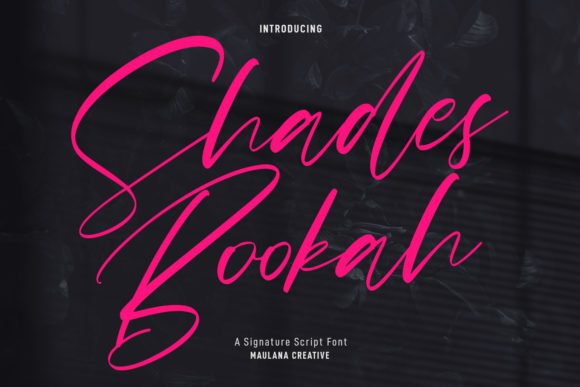
There’s something about a well-crafted handwritten font that immediately adds a layer of personality and warmth to a design. Shades Bookah Script is one of those typefaces. It’s not just a collection of letters; it’s a tool for creating a specific feeling—a blend of casual elegance and approachable sophistication. At its core, it’s a beautiful, flowing script font with a distinctly human touch, designed to feel personal yet polished.
Visually, Shades Bookah Script strikes a careful balance. The letterforms have a natural, slightly irregular baseline that mimics real handwriting, which prevents it from looking sterile or overly perfect. The strokes vary in weight, giving it a dynamic, authentic rhythm. It’s not overly ornate or difficult to read at sensible sizes, which is a common pitfall with many script fonts. The overall personality is one of friendly confidence—it feels like a note from someone you trust, not a hastily scrawled message. This makes it a versatile display font that can carry a headline or stand as a standalone logo without feeling out of place.
Where This Handwritten Font Truly Shines
The real value of any premium font lies in its application. Shades Bookah Script excels in projects where you need to inject authenticity and a personal touch. For brand identity, it’s a powerful choice for businesses that want to appear approachable and creative—think boutique bakeries, freelance consultants, artisanal product lines, or wedding planners. As a logo design element, it can form the core wordmark or be paired with a simpler sans serif font for the company name, creating a memorable and cohesive brand mark.
In the realm of marketing and social media graphics, its strengths are immediately apparent. Use it for quotes, special announcements, or promotional banners on Instagram or Pinterest. The font’s style naturally draws the eye, making it effective for banner ads and email headers where you need to quickly convey a friendly, engaging message. For packaging design, especially for products in the food, beauty, or lifestyle sectors, Shades Bookah Script can elevate a label from mundane to charming, suggesting a product made with care.
It also finds a comfortable home in editorial design and publishing. Consider using it for chapter titles, pull quotes, or author names on book covers. For bloggers and content creators, it’s perfect for stylizing featured images or creating distinctive title cards for videos. In print, it brings warmth to wedding invitations, greeting cards, and event programs. The key is recognizing its role: it’s a creative font meant for impact, not for long paragraphs of body copy.
Making It Work: Practical Guidance for Designers and Creators
Choosing a font is about more than just liking how it looks in isolation. You need to evaluate its fit for your specific project. With Shades Bookah Script, start by considering your audience. The adults 20–50 demographic will likely respond well to its blend of modern and classic sensibilities, but if your project requires a very corporate or ultra-minimalist aesthetic, a different typeface might be more appropriate.
One of the most practical aspects of this font is its PUA encoding. This means you can easily access all the extra glyphs, swashes, and alternates without needing specialized design software. These extras are crucial for customizing the look. You can add elegant flourishes to a capital letter or select a different ending for a word to avoid repetitive letter shapes. This level of control is what separates a good design from a great one, allowing you to tailor the font precisely to your layout.
Effective font pairing is essential for visual hierarchy and readability. Shades Bookah Script pairs exceptionally well with clean, geometric sans serif fonts like Montserrat, Lato, or Open Sans. The contrast between the organic script and the structured sans serif creates a professional and balanced composition. It can also work with a simple, sturdy serif font for a more traditional feel. The rule of thumb is to let the script be the star—use it for headlines, logos, or call-outs, and let the paired font handle the supporting text.
Before finalizing any design, always test for readability. While Shades Bookah Script is clearer than many, it should still be used at a size where its details are legible. Avoid using it for small body text or critical information like phone numbers and addresses. Its strength is in evoking a mood and capturing attention, not in conveying dense information efficiently.
Finally, understand the licensing. As a commercial font, it’s designed for professional use. Review the license details to ensure it covers your intended applications, whether for a client’s brand, your own business, or merchandise for sale. This due diligence protects your work and respects the font creator’s craft.
In the vast landscape of modern typography, Shades Bookah Script stands out as a reliable and expressive design asset. It’s a tool that, when used thoughtfully, can significantly enhance the emotional resonance and visual appeal of a wide array of projects, from digital platforms to printed keepsakes. It’s not just about what the font is, but what it allows you to create.