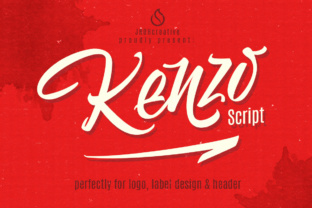
Kenzo Script: A Handwritten Font for Endless Creative Projects
There’s a particular challenge in finding a script font that feels both personal and versatile. Too many options look either too formal or too casual, limiting where you can actually use them. Kenzo Script manages to sit in that rare sweet spot. It’s a handwritten font with a natural, flowing rhythm, but it carries enough structure to work in professional contexts. The design has a warmth that digital typefaces often lack, giving your words an immediate human touch.
What makes it particularly useful is the sheer volume of options packed into the typeface. With over 490 glyphs and 267 alternates, Kenzo Script offers a level of customization that lets you tailor the look to fit the specific mood of your project. You can switch between different versions of letters, adjust connections, and create a feel that’s uniquely yours without needing to commission custom lettering.
Where Kenzo Script Truly Shines
Think about the last time a piece of design made you feel something. Often, it’s the typography that sets the emotional tone. Kenzo Script excels in situations where you want to convey authenticity, creativity, or a personal connection. For brand identity work, especially for lifestyle brands, boutiques, cafes, or artisan products, it can become the cornerstone of a visual system. It works beautifully for logo design, where a handwritten wordmark can feel bespoke and memorable.
It’s not just for logos, though. Consider its role in packaging design. A script font like this on a label for handmade soap, gourmet coffee, or a boutique candle instantly communicates care and quality. In editorial design, it can be used for pull quotes, chapter titles, or magazine features to add a layer of sophistication and break the monotony of standard body text. For digital creators, it’s a powerhouse for social media graphics, blog headers, and website accents. A well-placed Kenzo Script headline on an Instagram post or a Pinterest pin can stop the scroll and draw readers in.
For entrepreneurs and small business owners, this font is a practical design asset. It can help maintain a consistent and professional look across your marketing materials, from business cards and thank-you notes to email newsletters and promotional flyers. The goal isn’t just to look good, but to build recognition. Using a distinctive yet readable script font like this consistently helps your audience start to recognize your style before they even read the words.
Working With a Rich Character Set
The true power of Kenzo Script lies in its alternates. Having 267 different character variations means you’re not stuck with a single, repetitive look. When you’re setting a headline or a short phrase, you can access these alternates to avoid awkward letter combinations where two similar characters sit next to each other. This creates a more natural, less mechanical flow, which is the whole point of a handwritten font.
Experimentation is key. Open your design software’s glyphs panel and explore. You might find a swashy capital ‘S’ that adds just the right flourish to a script, or an alternate lowercase ‘e’ that connects more smoothly to the following letter. This process turns using a font into a more active, creative endeavor. It’s a level of detail that separates amateur design from polished, professional work, making it a valuable premium font for serious creators.
Practical Guidance for Choosing and Using Kenzo Script
Before you dive in, take a moment to evaluate if it’s the right fit. Kenzo Script is a display font meant for headlines, logos, and short bursts of text. Its personality is strong, so pairing it wisely is crucial. A classic strategy is to combine it with a clean, neutral sans serif font for body text. Think of Kenzo Script as the star of the show, and the sans serif as the reliable supporting cast that ensures readability. Alternatively, pairing it with a sturdy serif font can create a more traditional or editorial contrast.
Always test the font in your specific context. Type out the actual words you plan to use. Does the letter ‘k’ connect well to the ‘e’ in your brand name? Do the ascenders and descenders clash with other elements in your layout? Check the readability at the size it will be viewed. A beautiful script can become illegible if it’s too small or set against a busy background. This is where the many alternates come in handy again—you can often find a version of a letter that solves a spacing or connection problem.
Finally, understand the licensing. Since Kenzo Script is a commercial font, ensure your license covers your intended use, whether it’s for a client’s logo design, printed merchandise, or a digital product you sell. Respecting the font creator’s terms is part of professional practice.
Building a Cohesive Visual Language
Modern typography isn’t just about picking a nice font; it’s about building a system. Kenzo Script can be a foundational piece of that system for the right project. Its consistency across different weights and styles (if available in a family) helps maintain a unified look. When used thoughtfully, it influences how your audience perceives your brand. It can make a startup feel approachable, a product feel luxurious, or a message feel heartfelt.
The key is intentionality. Don’t use it everywhere just because you like it. Use it where it will have the most impact. A handwritten typeface like this has the power to cut through the digital noise and create a moment of genuine connection. In a world of sleek, impersonal design, that human touch can be your greatest asset. For designers, marketers, and creators looking for a reliable and expressive script, Kenzo Script offers a toolkit that can adapt to a remarkable range of creative challenges.